ServicesWhole-Home Filtration
Whole-Home Filtration in Niederwald, TX
We mount a filter on the main line where water comes into your home, so the shower, the kitchen tap and the washing machine all get water with less chlorine, odor and grit. A free water test comes first, and the system is sized from those numbers, not a brochure.
What a main-line carbon filter does and when it pays off
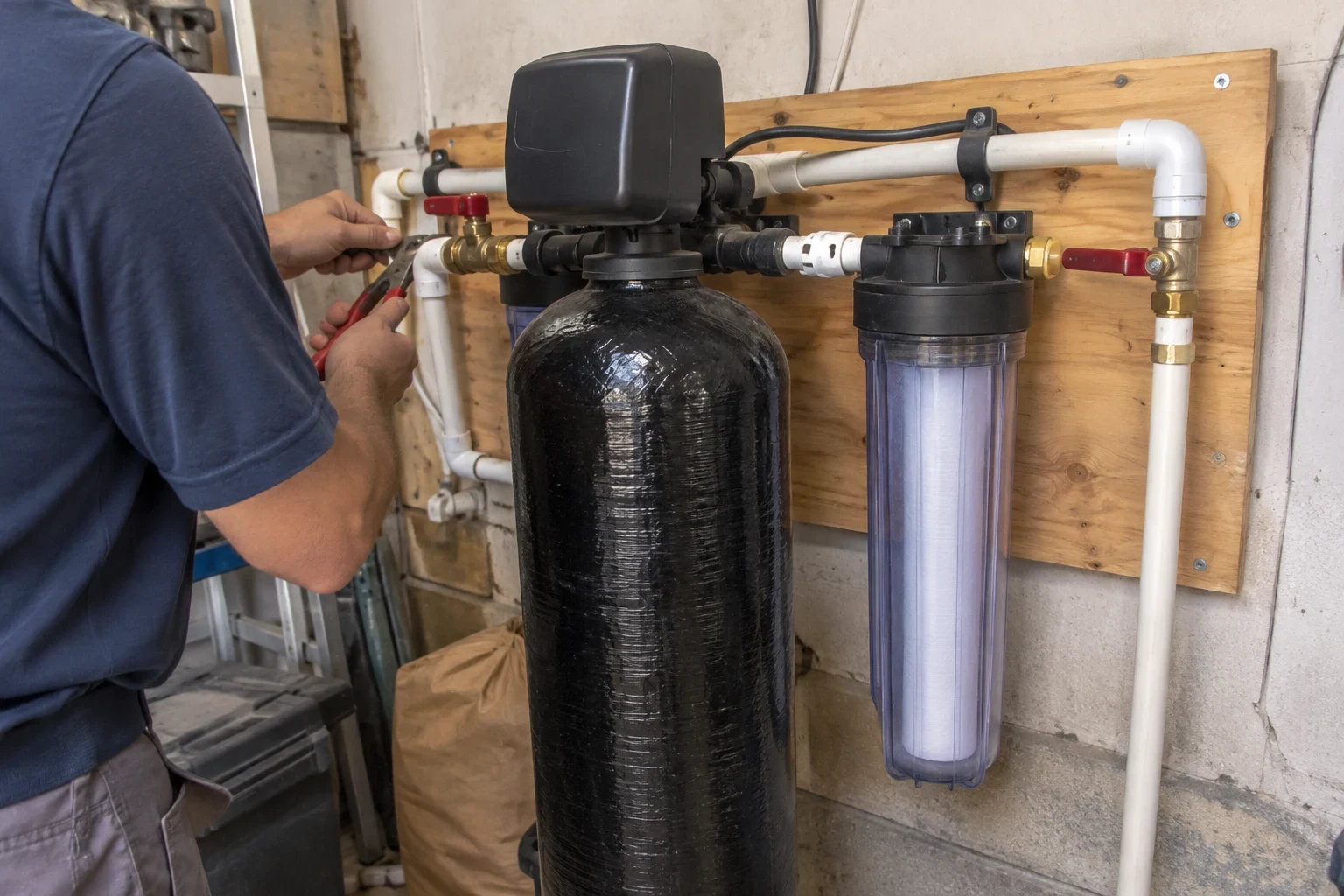
The trade name is point-of-entry filtration. The system goes on your main supply line after the shutoff and pressure regulator, usually in the garage or against an exterior wall, so every gallon passes through it before it splits off toward the water heater and the fixtures. Most installs pair a sediment prefilter with a tank of catalytic activated carbon. That carbon bed adsorbs chlorine and chloramine, along with the organic compounds behind musty or chemical flavors.
It is the right tool when the complaint shows up all over the house: the bathroom smells of chlorine once the shower is on, ice cubes taste stale, grit keeps lodging in faucet aerators. If drinking water is your only concern, a reverse osmosis system under the kitchen sink can be cheaper and just as effective. Carbon does nothing for scale, so if that is the problem we will compare salt-free water conditioners and water softener installation once your test gives us an actual hardness reading.
Timing matters too. Hot summer months warm the water sitting in your pipes, chlorine gasses off more readily, and your household runs more water through the system. We like fresh media in place before that peak, and ahead of winter we check that any housing mounted on an outside wall is protected from a freeze.
What comes with the installation
Free water test up front
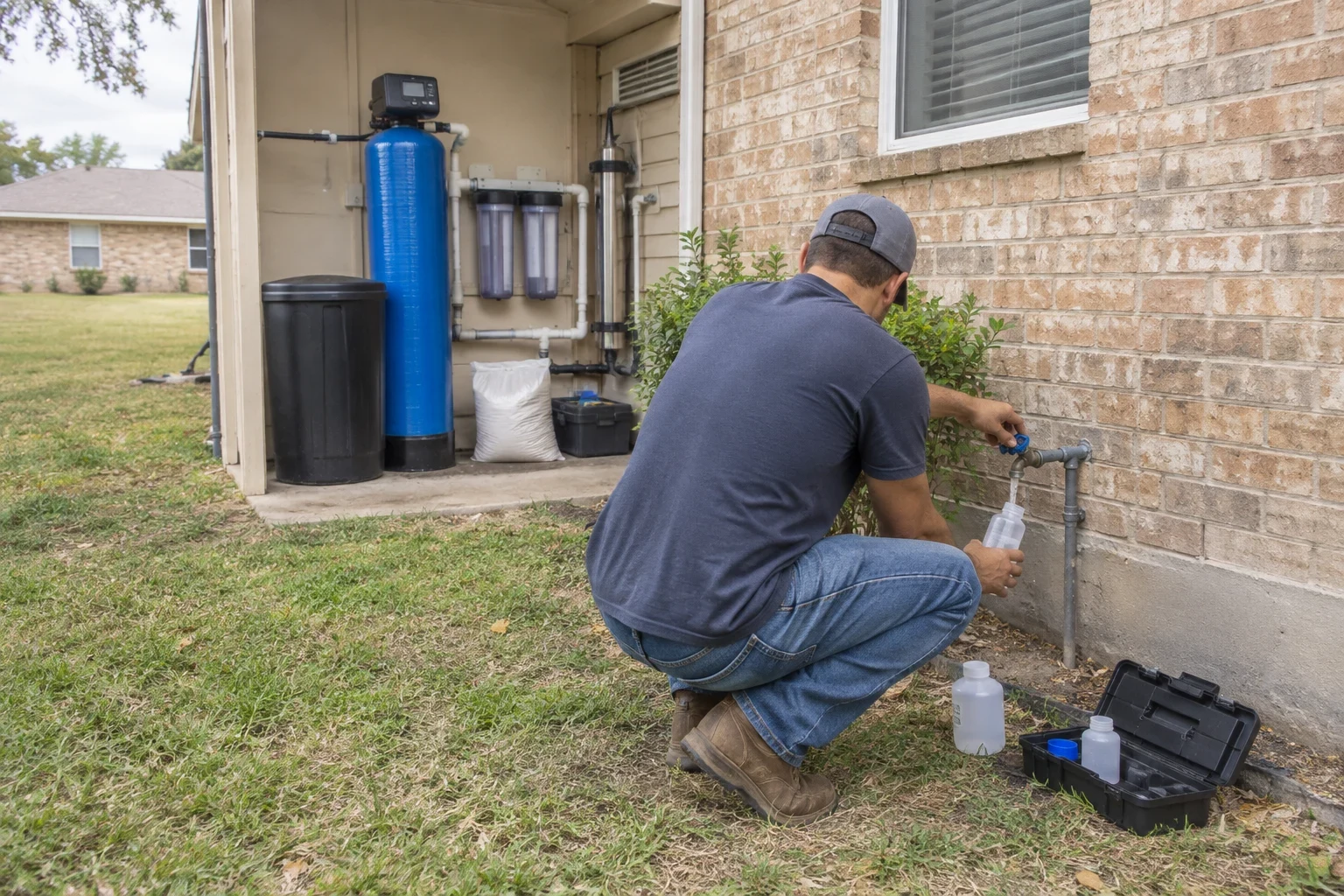
At your tap we measure chlorine, hardness, iron, pH and total dissolved solids. Those readings pick the media for the tank, and sometimes they show that a whole-home filter is not the right answer at all.
Sediment prefilter housing
A cartridge housing installed ahead of the main tank traps sand, pipe scale and grit. Keeping that debris out of the carbon bed holds your flow steady and stretches the life of the media.
Tank matched to peak demand
We choose tank size from gallons per minute at your busiest moment, counted by bathrooms and fixtures rather than square footage. Too small a tank rushes water past the carbon, and chlorine gets through whenever two showers overlap.
Bypass loop and shutoff valves
Three valves let you route water around the system for a cartridge swap or service while the rest of your home keeps running.
Insulation against cold snaps
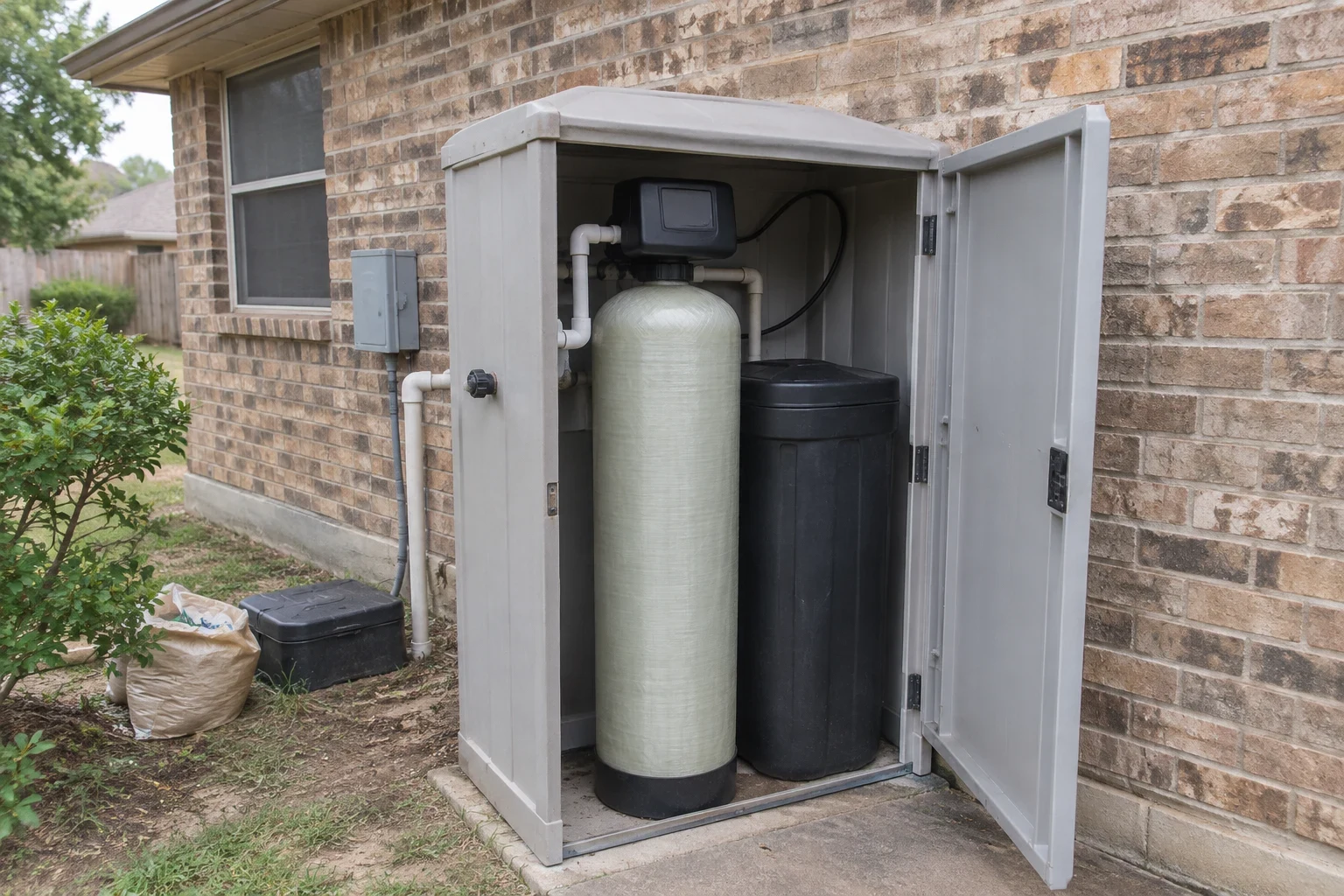
When the equipment sits outdoors or in an unheated garage, we wrap the housings and any exposed pipe so a hard freeze cannot split a cartridge bowl.
Free installation, cleanup included
Installation is free. It includes tying into your main line with fittings made for your copper or PEX, rinsing carbon fines out of the fresh media, testing for leaks and pressure, and taking away packaging and old parts.
Signs whole-home filtration fits your home
- The shower smells like a pool
- Steam from hot water lifts chlorine into the air, which is why many people first catch it in the bathroom. A filter on the kitchen faucet cannot help with that.
- Sand or flakes in the aerators
- Rinsing debris out of faucet aerators and showerheads again and again means sediment is traveling through your pipes. It is collecting on appliance inlet screens as well.
- Drinks and ice taste flat
- Chlorine and dissolved organics dull the flavor of coffee and tea and leave ice tasting old. Carbon takes out the compounds responsible.
- A filter in every room
- A fridge pitcher, a showerhead filter and a faucet cartridge each come with their own refills. One unit on the main line is often cheaper to maintain.
- Seals and flappers fail early
- Over time, chlorine and chloramine stiffen rubber washers, toilet flappers and appliance gaskets. Frequent replacements are a clue that your water treatment chemicals are doing some of the damage.
From the first call to the finished install
- 1
Phone call and free water test
You call, we set a time, and we test water drawn from your tap. During the same visit we find where the main enters your home, measure the available wall space and look for a nearby drain.
- 2
Recommendation in writing
You get the tank size, the media we recommend and why, along with a plain list of what the system will remove and what it will not. If your results point to a different service, we say so.
- 3
Installation day
We shut off the main, plumb in the bypass valves, mount the prefilter housing and set the tank, adding a drain line when the model backwashes. The new carbon is flushed until no more black fines show in the discharge, then every joint is pressure-tested. You are without water for only part of the visit.
- 4
Walkthrough and upkeep schedule
Before leaving we show you how the bypass valves work and how to swap the prefilter cartridge. We also hand you a seasonal schedule for cartridge changes and our estimate of when the carbon bed will need replacing.
What moves the price
Every home's water and plumbing differ, so we price from the test results and what we see at your main line. Installation is free, so the quote is mostly about the equipment and media. You get your quote by phone or at the visit, with each part listed.
- Flow rate and tank size
- More bathrooms and fixtures mean higher peak demand and a larger tank with more carbon.
- Type of media
- Standard activated carbon handles chlorine well. Catalytic carbon, needed for chloramine, costs more but is the right choice when the test calls for it.
- Backwashing or upflow design
- A backwashing tank cleans itself but needs a control valve and a drain. An upflow, non-backwashing tank is simpler but has different media life.
- Add-on equipment
- Pairing the filter with a salt-free conditioner or UV water purification adds components and space on the wall.
Questions about whole-home filtration
- Will a whole-home filter reduce my water pressure?
- When the tank is matched to your peak demand, the pressure drop is small enough that most people never notice it. A real loss usually points to one of two things: a tank too small for the number of fixtures, or a sediment cartridge packed with grit. That is why we size by flow rate, and we show you how to read the cartridge so you can catch a clog early.
- What upkeep does the system need?
- The sediment prefilter cartridge is the part you swap most often, usually every few months. How often depends on the amount of sand and scale your supply carries. The carbon in the main tank lasts several years, with the exact span set by your water use and chlorine level. We build your change schedule from your test results.
- Will this soften my water?
- No. Activated carbon pulls out chlorine and the compounds behind bad tastes and smells, but calcium and magnesium pass straight through. If your test shows enough hardness to leave scale, we can talk about adding a salt-free water conditioner or a softener next to the filter.
- Does a whole-home filter take out lead?
- Most point-of-entry carbon media is not built to reduce lead at the flow rate a full house demands. For the water you drink and cook with, a reverse osmosis system under the kitchen sink is usually the better tool. Our water testing and analysis service can confirm whether lead is worth worrying about before you spend anything.
- Where in my home does the equipment go?
- Close to the point where your main line comes in, which is often the garage or an outside wall. A tank that backwashes also needs a drain within reach. We pick the exact spot with you during the free water test.
- Is there a best season to install?
- We can install year-round, but spring works best. New media goes in ahead of summer, when warmer water gives off more chlorine smell and your home runs more gallons through the system each day.
Get fresh filtration in before summer
Start with a free water test. We will show you what is in your water and size a system that fits your home.