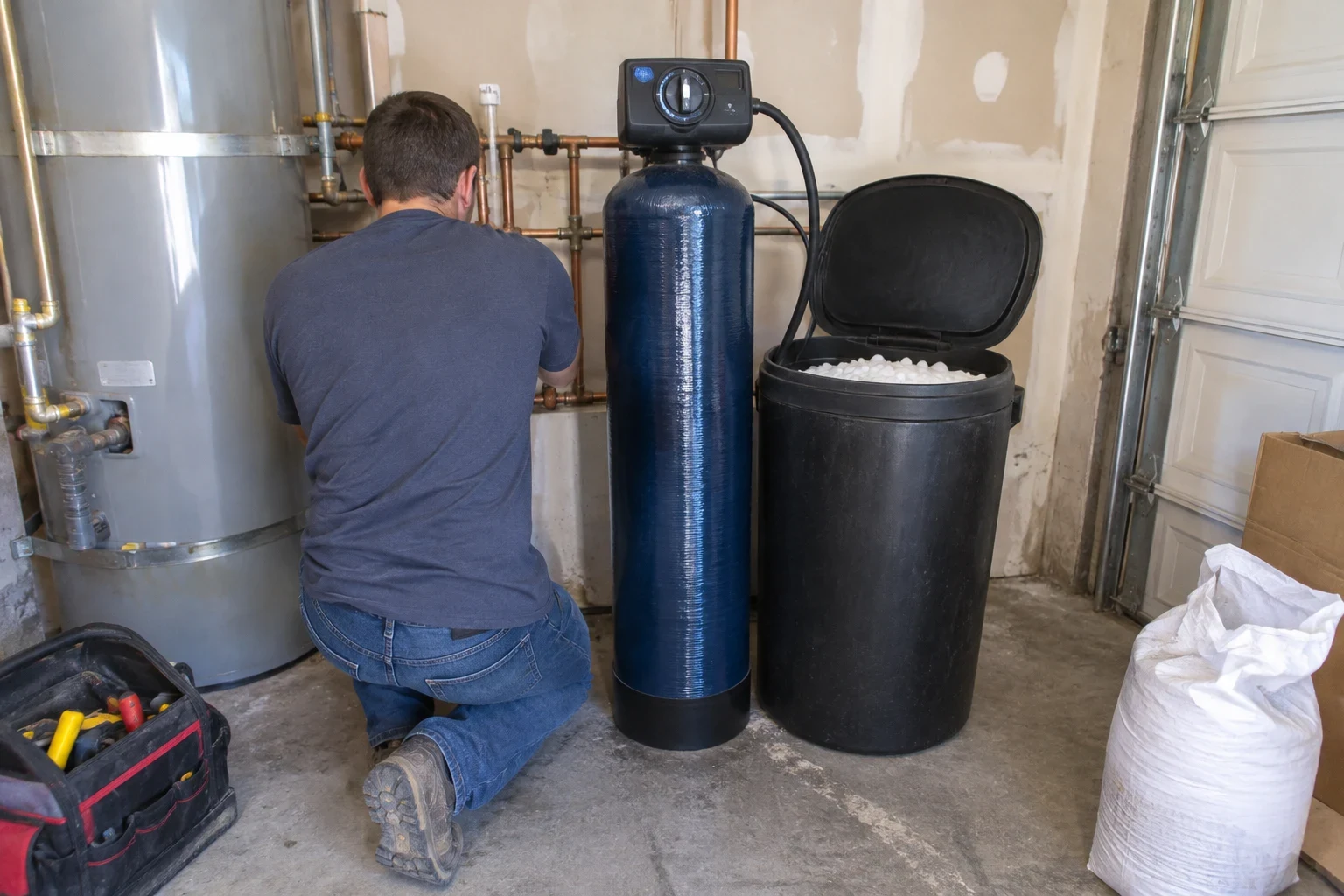
ServicesWater Softener Installation
Water Softener Installation in Niederwald
We size and install water softeners from a hardness reading taken in your home, not a guess. Ion-exchange resin pulls calcium and magnesium out before they coat your water heater, fixtures and glassware. The water test comes first and costs nothing, and installation is free.
When softening is worth it for your home
The core of a softener is a pressure tank packed with resin. Each bead holds a charge of sodium or potassium ions, and as hard water moves through the bed, the beads give up those ions and grab calcium and magnesium in their place. When the resin is close to full, the control valve kicks off a recharge cycle. It draws brine from the salt tank, rinses it through the bed to strip the trapped minerals off the beads, then sends that rinse water out through the drain line.
Many Central Texas supplies come out of limestone, so hard water is common, yet the reading can change a lot from one source to the next. We measure before we recommend anything. When your number comes back low, we will say plainly that a softener would not justify the salt, and suggest a salt-free water conditioner or whole-home filtration as the better fit.
Timing plays a part too. Hot water drops scale faster than cold, so getting a softener in place ahead of heavy summer use, or before the cold months keep your water heater firing, protects the most expensive equipment in your home.
What our installation includes
- Hardness and iron reading
- We measure hardness in grains per gallon and check for iron, which fouls softener resin if it goes untreated. Those two numbers decide the size and setup of your system.
- Sizing by grain capacity
- We multiply your hardness by your household's daily water use to find how many grains the system must remove each day. Then we choose a resin tank that regenerates every several days rather than every night. An undersized unit burns through salt and water, and an oversized one costs more up front than it needs to.
- Metered control valve
- We fit demand-initiated valves that count the gallons used and regenerate only when the resin nears capacity. A plain timer regenerates on a schedule whether you used the water or not.
- Bypass, drain and air gap
- Every install gets a bypass valve, so you can isolate the softener without shutting off water to your home. We route the discharge line to a suitable drain and leave an open air gap above it, so used brine has no path back into the tanks.
- Placement and freeze protection
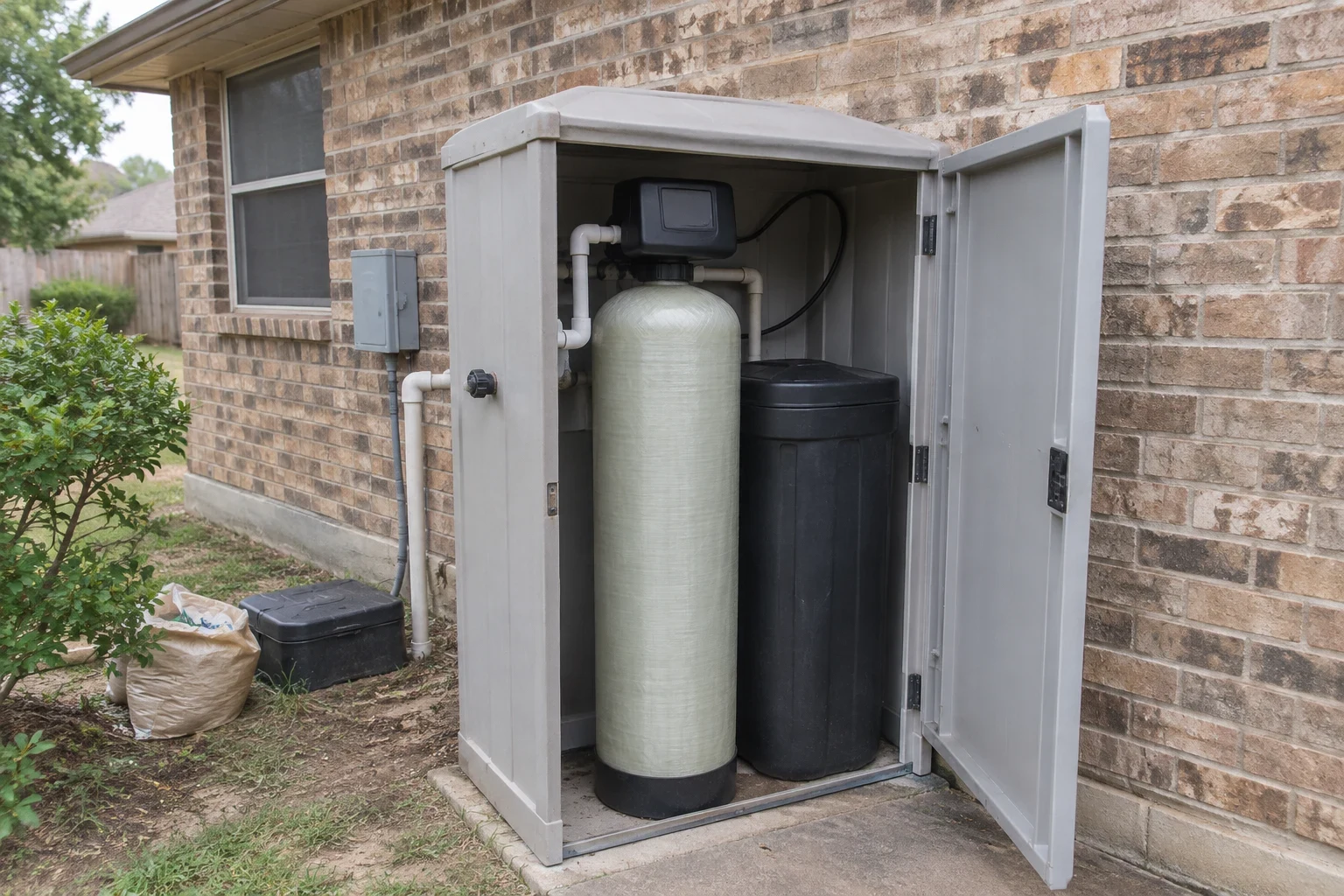
- Most softeners go on a garage loop or beside the water heater. If the tanks sit in an unheated garage, we insulate exposed lines and show you how to keep the brine tank safe during a hard freeze.
- Startup and walkthrough
- We load salt, run the first regeneration and test softened water at a faucet. Before we leave, you will know where the bypass is, how to check the salt and what the valve settings mean.
Clues that hard water is at work in your home
Chalky rings on faucets and spouts
The pale crust that builds up on aerators, showerheads and tub spouts is calcium carbonate, left behind each time a drop of water dries.
Dishes that never come out clear
When glassware is spotted after every wash cycle, dissolved minerals are drying onto it. A rinse aid can hide the spots for a while, but the minerals are still there.
Popping from the water heater
A tank heater that rumbles or pops typically has a layer of scale and sediment on its bottom. That layer sits between the burner and the water, so each heating cycle runs longer and the tank ages sooner.
Weak lather and soap film
Calcium and magnesium react with soap to form a sticky curd instead of suds. You go through shampoo and detergent faster, and a dull residue stays on skin, towels and glass shower doors.
Fading shower pressure
Mineral deposits slowly close off the small ports in showerheads and faucet aerators, and the flow weakens as they narrow.
What sets the price of your softener
Because installation is free, the number on your quote reflects the equipment your water actually needs. Two homes with the same square footage can call for different systems when their hardness or the number of people living there differs. That is why we test before we price.
Hardness times household size
Every added grain per gallon and every added person raises the amount of calcium and magnesium the resin must capture in a day. A larger daily load calls for more resin volume, plus a salt tank with enough room to keep up between refills.
Iron or chlorine present
Iron requires resin and valve settings built to tolerate it, or a dedicated iron and sulfur removal stage installed upstream of the softener. Chlorine gradually degrades resin beads, so adding a carbon pre-filter can lengthen their service life.
Timer or metered valve
A metered valve carries a higher upfront cost than a timer, but over the years it consumes less salt and less water.
Existing plumbing where it goes
If your home already has a softener loop, the hookup is simple. Without one, we reroute the supply line, and a drain that sits far from the tanks adds length to the discharge run.
Permit requirements
Certain jurisdictions want a plumbing permit for the drain hookup. We confirm the requirement for your address and build it into the quote if it applies.
How install day runs
- 1
Free water test
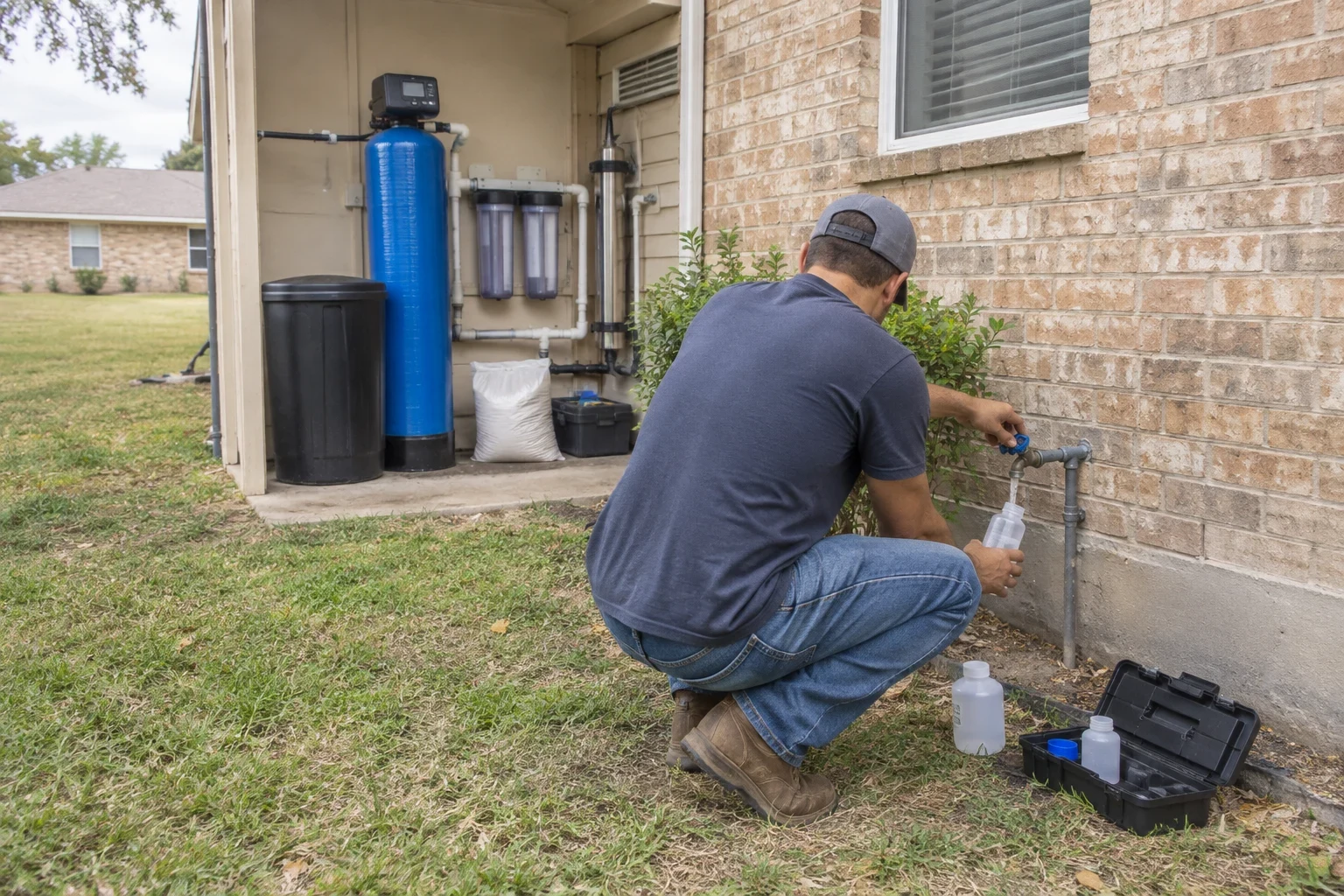
We draw a sample from a cold tap and read hardness and iron on the spot. You get the numbers and a straight answer on whether a softener fits your water.
- 2
A clear quote
We explain the tank size, valve type and any pre-filter we recommend, and give you the full price before anything is scheduled. Nothing is added later.
- 3
Installation
We shut off the main, cut into the supply line at the softener loop or water heater, and plumb in the bypass, tanks and drain line. A typical job wraps up in a morning or an afternoon. The main stays closed only while we are cutting and joining pipe, and we open it again as soon as the connections hold.
- 4
Startup and cleanup
We flush the new resin, run the first regeneration and confirm soft water at the tap. Packaging and cut pipe leave with us.
Water softener questions
Will softened water taste salty?
At typical hardness levels, most people do not notice it. The sodium added rises with hardness, so very hard water adds more. If you would rather avoid it, potassium chloride works in place of salt, or a reverse osmosis system at the kitchen sink takes it out of your drinking water.
How often do I add salt?
It depends on your hardness, household size and valve settings. Most people check the brine tank once a month and keep salt a few inches above the water line. If salt forms a hard crust, called a salt bridge, break it up so the water underneath can turn into brine.
Should I get a softener or a salt-free conditioner?
A softener removes calcium and magnesium. A salt-free conditioner changes how those minerals behave so they are less likely to form scale, but leaves them in the water. For high hardness, spot-free glass and better lather, a softener does the job. For moderate hardness, a conditioner may be enough, with no salt and no drain line.
Does a softener filter my water?
No. It removes hardness minerals and small amounts of iron, but not chlorine taste, sediment or most other contaminants. For those, we pair it with whole-home filtration or an under-sink reverse osmosis system.
Can the softener go in my garage?
Yes. Many newer homes are built with a softener loop in the garage for exactly that reason. We insulate exposed piping, and during a freeze you should keep the garage closed so the tanks and lines stay above freezing.
When is the best time to install?
Any time works. Spring is a good choice because the softener is in place before summer water use peaks, and fall lets it protect your water heater before the cold months.
Find out what your water needs
We read your hardness in your home, explain the result and tell you plainly whether a softener earns its place. If you go ahead, installation is free.