ServicesReverse Osmosis Systems
Reverse Osmosis Systems in Niederwald
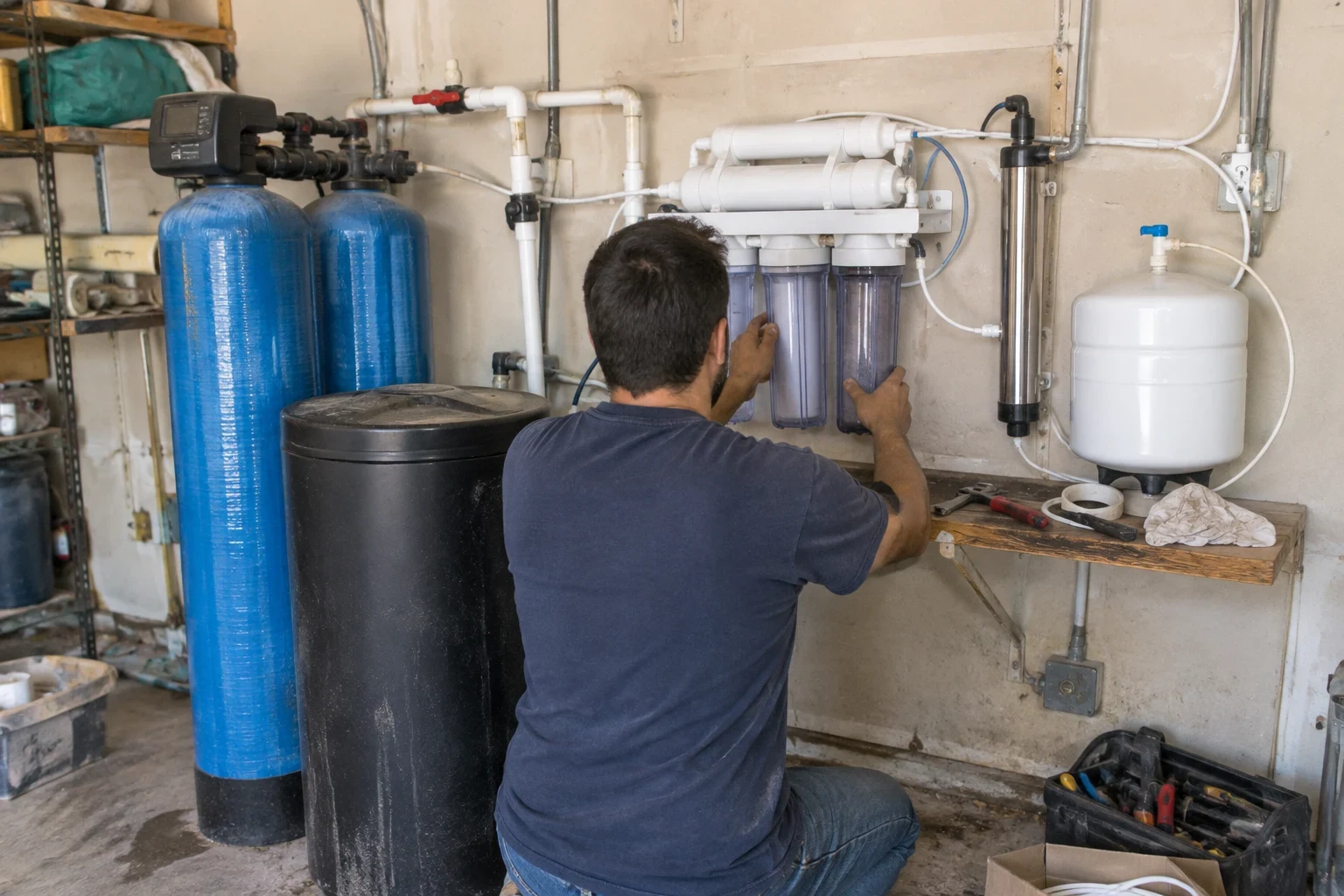
We install under-sink reverse osmosis systems with a membrane fine enough to hold back dissolved solids, lead and the chlorine taste a plain carbon filter can let through. Every job begins with a free test of your tap water, so the system matches your home.
What an RO system does at your kitchen sink
Reverse osmosis runs on the pressure already in your plumbing. That pressure forces tap water against a semipermeable membrane whose pores are small enough that water molecules pass and very little else does. Dissolved salts, metals and most minerals are held back and rinsed away through a drain line. Filtered water collects in a small pressurized tank under the sink, which supplies its own faucet and, if you want, your refrigerator. We offer a tankless RO system (800 gallons per day, 7 stages, 0.0001 micron) and a lower-price 5-stage tank RO (sediment, GAC, carbon block, RO membrane and post carbon) with an under-sink tank.
An RO unit serves a single tap. Your showers, laundry and toilets keep running on regular supply water. When the issue is chlorine, hardness or staining across the whole house, we tell you so and steer you toward whole-home filtration or a water softener, rather than installing one faucet to solve a problem that lives in every pipe.
Timing matters. A membrane turns out less water when the supply is cold and more as it warms, so we like to install or service systems in spring. That way the system is running at full output before summer heat has everyone filling more glasses, pitchers and ice trays.
What comes with the installation
- Sediment prefilter
- A spun polypropylene cartridge traps sand, grit and flakes of rust before they can clog or scratch the stages after it.
- Carbon prefilter
- A carbon block takes out chlorine ahead of the membrane. Chlorine damages thin-film membranes, so this stage guards the costliest part of the system.
- The RO membrane
- Here the dissolved solids get separated from the water. We measure your pressure beforehand, since an underfed membrane produces less water and sends more to the drain.
- Storage tank and post filter
- An air bladder keeps the filtered water in the tank under pressure so the faucet flows evenly. After the tank, a carbon polishing filter removes any flavor the water gathers while stored.
- Dedicated faucet and drain connection
- A separate faucet goes on the sink or counter, and the brine line ties into the drain with a saddle fitting above the trap, which keeps drain water from flowing back into the system.
- Free installation
- Installation is free. Before any work starts, you still receive a clear quote for the equipment.
Signs an RO system makes sense for you
You buy bottled water
When bottled water cases keep piling up in the pantry or garage, an RO faucet typically takes their place and ends the store runs too.
Chlorine taste in coffee and tea
Dissolved minerals and chlorine dull the taste of coffee and tea. The membrane and a carbon post filter remove most of both.
Aging pipes and fixtures
In an older home, brass valves and solder joints can release lead into water resting in the pipes, even if the water at your meter is clean. A well-kept RO system is one of the stronger safeguards for drinking water here, and a test shows whether lead is actually present.
White crust on kettles and cloudy ice
Cloudy ice and scale in the kettle come from minerals dissolved in the water. RO removes most of them from the water you drink and cook with.
Your test showed high dissolved solids
A high TDS number on your test is the most concrete reason to pick RO instead of a basic carbon filter.
How we install your RO system
- 1
Free water test
We measure total dissolved solids, chlorine, hardness and water pressure at your tap. Those readings tell us whether RO fits and which configuration makes sense.
- 2
Your quote
You get a written quote with each component and add-on listed, such as a pump or fridge line. Nothing gets added once work starts.
- 3
Installation day
We close the cold-water supply valve, fit a tee and feed valve onto that line, mount the filter housings and tank, and set the faucet in a new or existing hole. Then we tie the drain line in above the trap. Nearly all of this happens inside your sink cabinet, and we put down protection first.
- 4
Flush and verify
Fresh carbon and a new membrane need a rinse, so we fill and empty the first tank. After that we check the filtered water with a TDS meter while you watch and compare it with your tap reading.
- 5
Filter schedule
We write down when each stage is due before we leave. Swapping prefilters each spring keeps the system at full output for the hot months.
What moves the price of an RO system
Two RO systems can look alike under a sink and still be priced far apart. The gap comes from how many filter stages your water needs, the pressure your plumbing delivers and how far the filtered water has to travel. You hear the full figure before we touch a fitting.
- How many stages
- Each cartridge adds cost. A plain four-stage setup sits at the lower end, and extras like a remineralization stage or a second carbon block raise it. We include only the stages your test results call for.
- Incoming water pressure
- When the pressure coming into your home runs low, the membrane struggles and sends more water to the drain. A booster pump or permeate pump corrects that, and it adds to the equipment total.
- Fridge and ice maker line
- Sending filtered water to the refrigerator means extra tubing and fittings. The route matters too, since a run through several cabinets or under the floor takes more material and time.
- Faucet and countertop
- Granite and quartz need a slow, careful drilled hole. A spare opening on the sink deck, left from an old sprayer or a soap pump, can often take the RO faucet and skip the drilling. The faucet finish you pick plays a part as well.
Reverse osmosis questions
Something not covered here? (512) 710-1991
How much water goes down the drain with RO?
To flush away the salts and metals it blocks, the membrane needs a constant rinse, so part of the water coming in always exits through the drain line. The size of that portion depends on your line pressure and which membrane is used. Good pressure or a permeate pump cuts it considerably, and we measure pressure during the free test so you have the numbers before you choose.
Does RO remove healthy minerals?
Yes, it strips out most dissolved minerals, including calcium and magnesium. For most people, meals provide far more of those minerals than water does. If you prefer water with a little mineral taste, a remineralization cartridge can go after the membrane.
How often do the filters need changing?
Plan to replace the prefilters about once a year, sooner if your water is gritty. The membrane usually outlasts the cartridges beside it. You get a written schedule from us, and a simple TDS reading shows when the membrane begins letting more solids through.
Why is my RO faucet slower in winter?
Colder water is denser and pushes through the membrane more slowly, so the tank fills more gradually in the cool months. Flow picks back up as the water warms in spring. When output stays low year-round, the usual culprits are clogged prefilters or a tank that has lost its air charge, and either is an easy fix.
Will it fit under my sink with a garbage disposal?
Usually, yes. The filter housings hang on the side wall of the cabinet, and the tank sits beside them. If the space is very cramped, we can put the tank in the next cabinet over or a nearby utility spot and run tubing to it.
Find out what is in your water first
We test your tap water at no charge, explain the numbers and tell you whether RO is the right fit. If it is, the quote is clear and installation is free.