ServicesWell Water Filtration
Well Water Filtration and Treatment in Niederwald
Water from a private well arrives untreated, so what reaches your tap depends on the aquifer, the casing and recent weather. We test it first, then install sediment, iron, carbon or UV stages in the right order, sized to your pump and plumbing.
What well water filtration does for your home
No utility treats the water from your own well. Minerals, grit, dissolved iron and the occasional bacteria all come up the drop pipe together. Our job is to find out which of those are actually in your water, then build a filter train that handles only those, so you are not paying for stages you do not need.
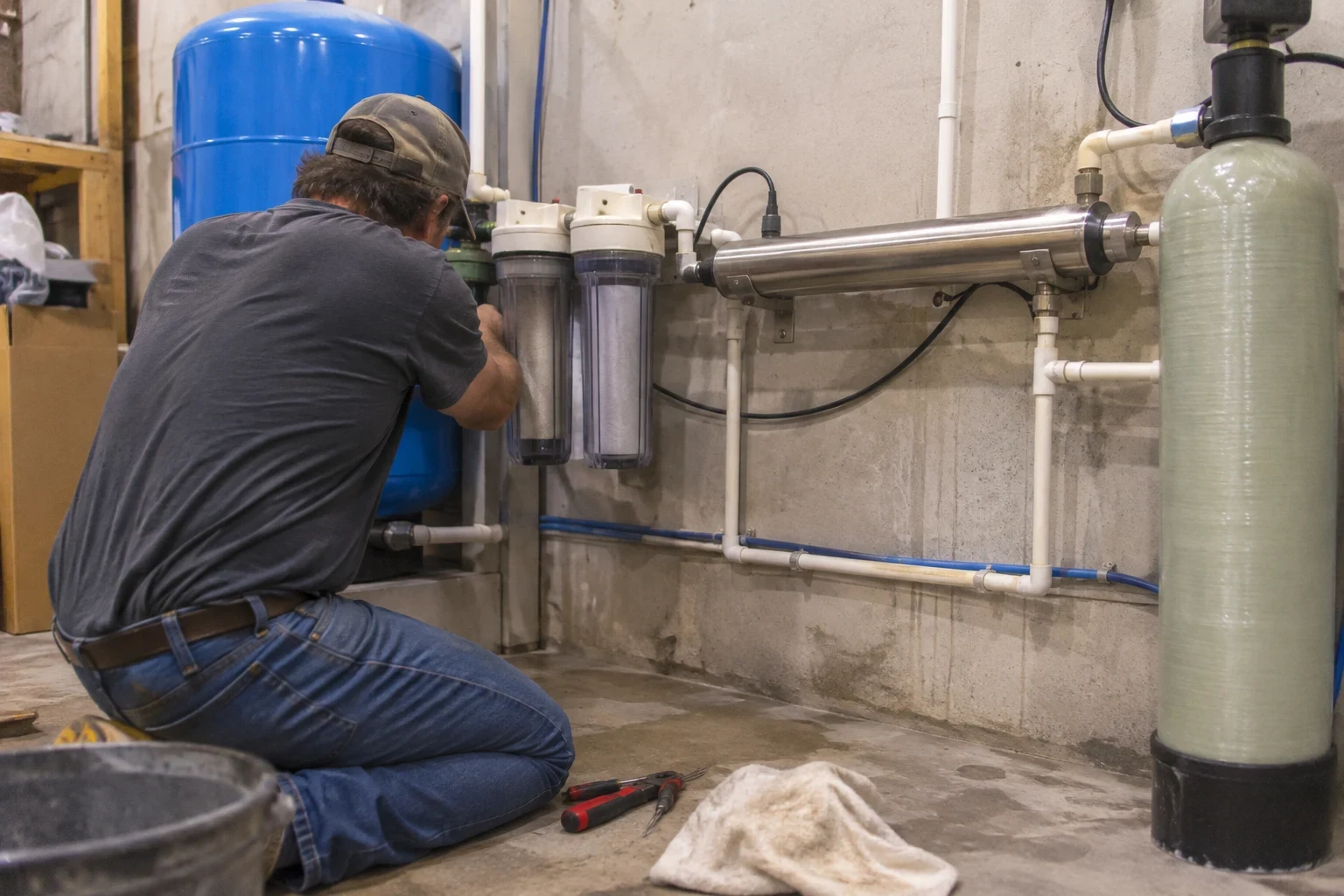
Order matters as much as the equipment. Sediment comes out first so it cannot clog the media behind it. Iron and manganese get oxidized and filtered next. Carbon handles taste and odor, and a UV lamp, when the test calls for one, goes last so clear water passes the bulb.
Timing matters too. Heavy spring and fall rains can push surface water toward shallow wells, and late-summer drawdown tends to stir up sediment and concentrate minerals. We prefer to test and set up a system ahead of those stretches, before stains and odors show up in your home.
What the work includes
- A free water test to start
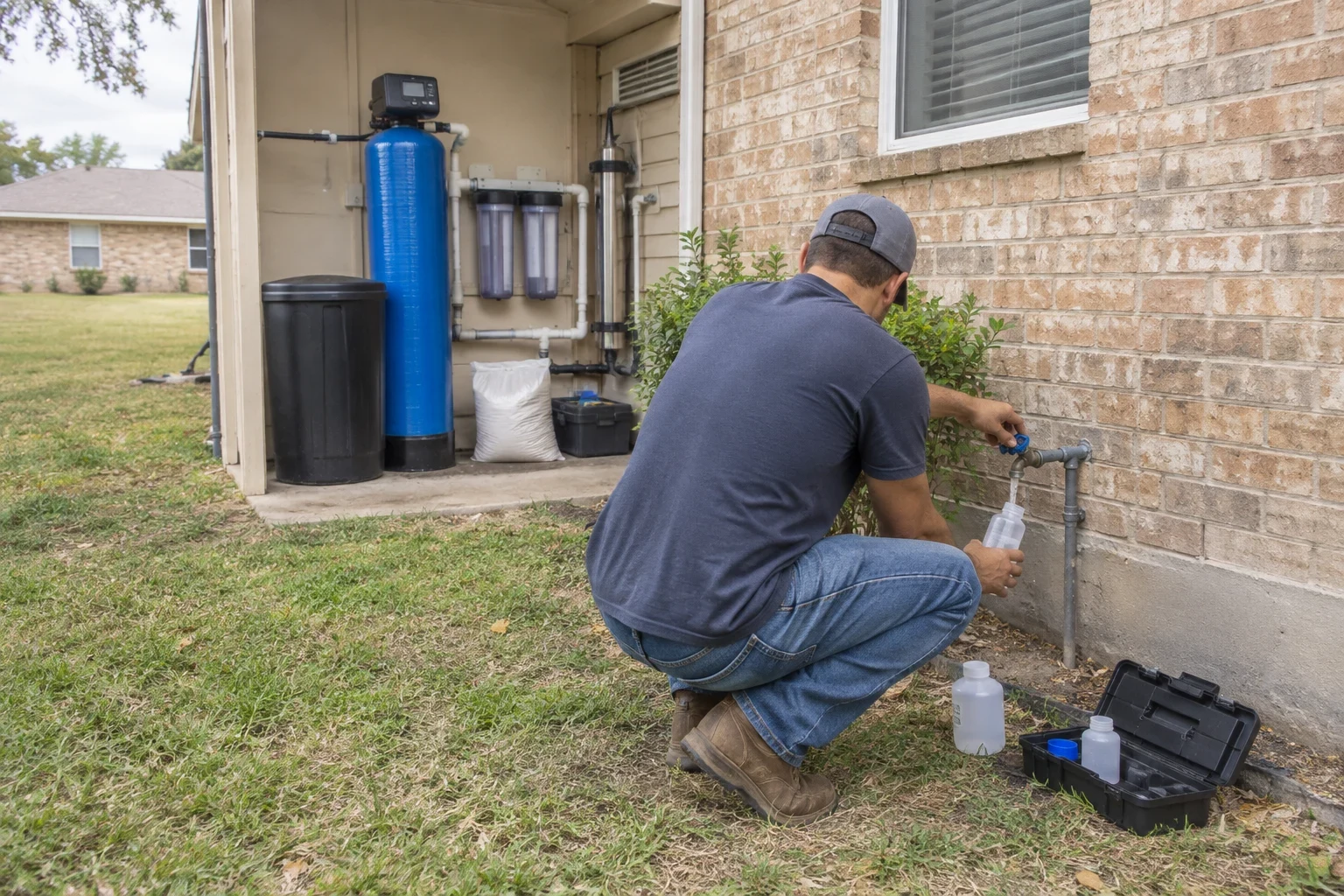
- We check hardness, iron, manganese, pH, total dissolved solids and hydrogen sulfide odor at the pressure tank. If your well's age or recent flooding points to bacteria, we will recommend sending a sample to an outside lab before anything is installed.
- Sediment prefiltration
- A spin-down screen catches sand and grit you can see. A pleated or 5-micron cartridge behind it catches the finer silt that wears out valve seals and fixture cartridges.
- Iron, manganese and sulfur stages
- Oxidizing media or an air-injection tank converts dissolved iron and sulfur into particles the bed can trap and backwash away. Heavy cases are covered in more depth on our Iron and Sulfur Removal page.
- Carbon and pH correction
- Catalytic carbon removes lingering odors and improves taste. If your pH tests below about 6.5, a calcite neutralizer raises it so the water stops dissolving copper pipe, which is what leaves blue-green stains.
- UV disinfection when needed
- A UV chamber sized to your peak flow inactivates bacteria without adding chemicals. Details are on our UV Water Purification page.
- Plumbing at the pressure tank
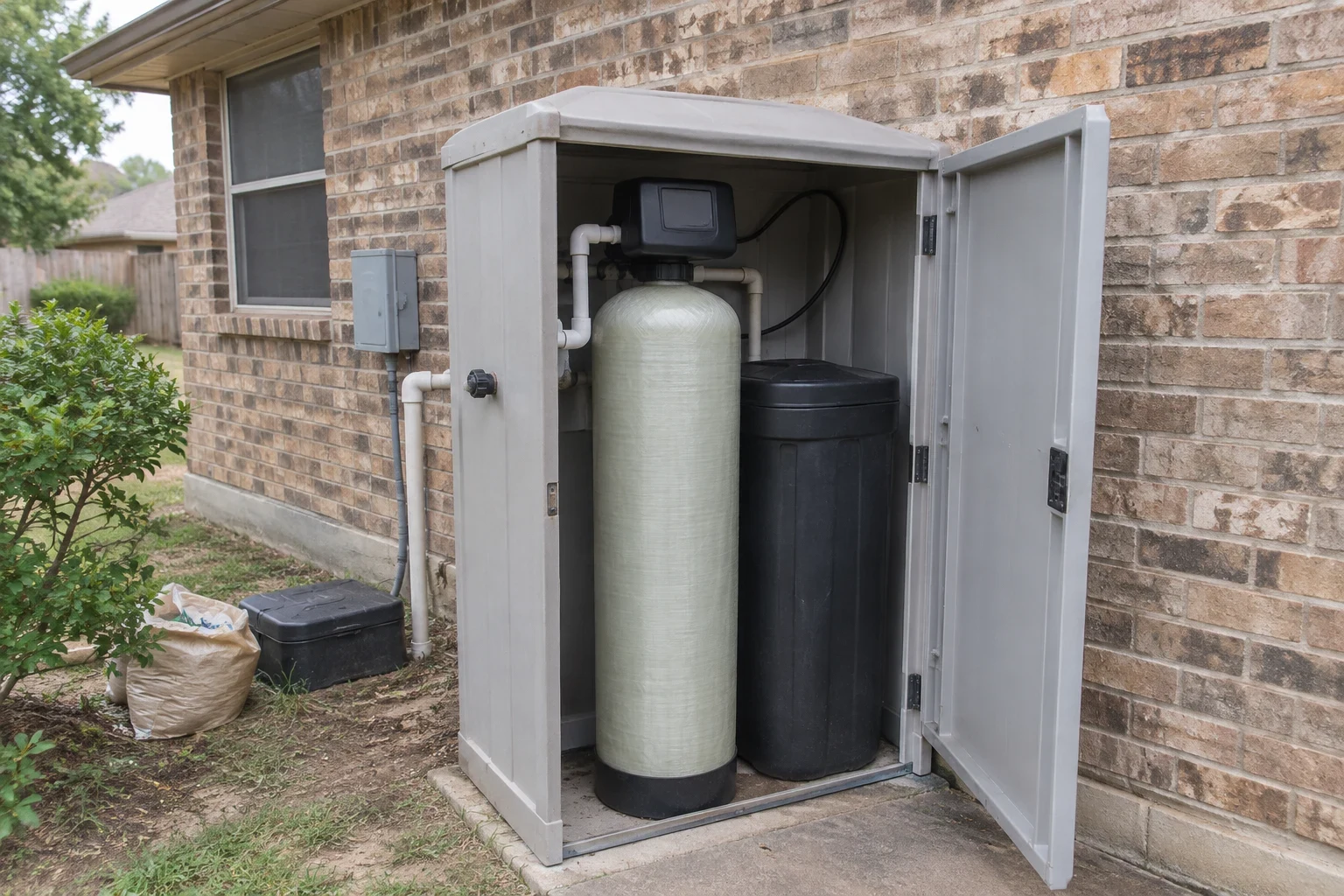
- Everything mounts after the pressure tank with a bypass valve and gauges before and after the filters, plus a drain line for backwashing media. We offer free installation.
Signs your well water needs filtering
Orange or brown stains
Rust-colored rings in toilets and on laundry usually mean dissolved iron oxidizing once it hits air. Manganese leaves darker, almost black streaks.
A rotten egg smell
Hydrogen sulfide gives off that sulfur odor, often strongest on the hot side. Sometimes the water heater's anode rod makes it worse.
Grit in faucet aerators
Sand in aerator screens and ice maker valves points to sediment coming up from the well, common when water levels drop in late summer.
Blue-green stains under fixtures
Acidic water slowly dissolves copper plumbing. The stains are the early warning, pinhole leaks come later.
Cloudy water after heavy rain
If your water turns cloudy or tastes different after a storm, surface water may be reaching the well. That calls for testing, including bacteria, right away.
How a well filtration job runs
- 1
Test at the tank
We sample at the pressure tank before any existing filter and ask about well depth, pump age and past problems. Those answers shape what we test for.
- 2
A written recommendation
You get a line-item plan where every stage ties to a test result. If a single carbon filter will do, that is what we tell you.
- 3
Check pump flow
Backwashing media needs a certain gallons-per-minute rate. We time a bucket fill and read the pressure switch settings so the system matches what your pump actually delivers.
- 4
Install and flush
We cut power at the pressure switch, plumb the bypass, stages, gauges and drain line, then flush each stage. Lines get sanitized when UV is added, and we clean up before we leave.
- 5
Retest and set a schedule
A follow-up test confirms the results. We give you a cartridge and lamp schedule timed ahead of the rainy months and late-summer drawdown.
What moves the price
Every well is different, so we quote after testing rather than from a package list. Installation is free; the quote mostly reflects the equipment your water needs. You get your quote by phone or in writing before any work starts.
- Number of stages
- Water that only needs sediment and carbon costs far less than water that also needs iron removal, pH correction and UV.
- Pump flow and backwash
- Larger media tanks need more flow to backwash. A weak pump may mean choosing a different media or a smaller bed.
- Space and plumbing access
- Room near the pressure tank, pipe size and whether a drain is close by all affect the parts list.
- Ongoing parts
- Sediment cartridges, carbon and UV lamps get replaced on a schedule. We list those costs up front so you know the yearly upkeep.
Well water filtration questions
Something not covered here? (512) 710-1991
Why test the water before choosing equipment?
Each problem in well water calls for its own stage. Iron, hydrogen sulfide, acidic pH and bacteria are treated by different media, and a mismatched bed can clog within months or pass the problem straight through. Testing first lets us size each stage to what your water actually contains.
How often should my well be tested?
Once a year is a good baseline, and spring works well before the heavy rains. Test again after flooding, after pump work or any time the taste, smell or color changes.
Will filters lower my water pressure?
A correctly sized system drops pressure only a few psi. The gauges we install before and after the filters show when a cartridge is clogging so you can change it before showers weaken.
Can one system handle iron, odor and hardness together?
Often yes, as a series of stages. Hardness is usually handled separately with water softener installation or a salt-free water conditioner, depending on your test numbers.
Where does backwash water go?
Backwashing media sends a set volume of water to a drain each cycle. We plan the drain line during the visit and set the backwash timing so it runs overnight when you are not using water.
Know what is in your well before the next rainy stretch
One call sets up a free water test at your home. We will show you the results and recommend only the stages your water needs.