ServicesIron and Sulfur Removal
Iron and Sulfur Removal in Niederwald
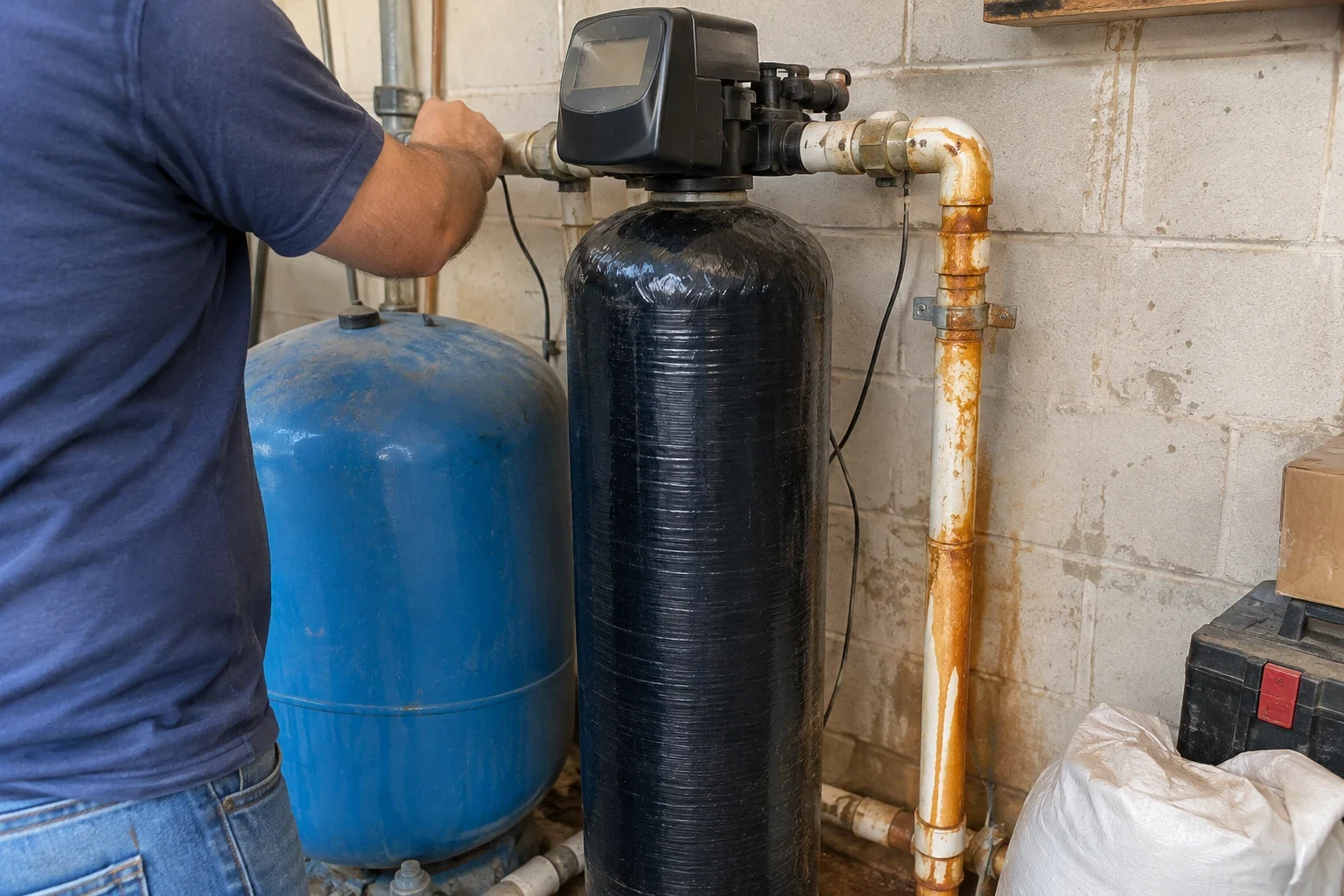
Orange rings in the toilet, gray laundry, and a rotten-egg smell from the hot tap have chemical causes we can measure. We test your water first, then install an oxidizing filter sized to your home's flow so iron and sulfur are removed before they reach a fixture.
What iron and sulfur do to your water
Iron usually arrives dissolved, as ferrous iron, so the water looks clear at the tap. Once it meets air in a toilet tank or a dishwasher, it oxidizes into ferric iron, the rust-colored particle that stains porcelain, grout and clothes. Hydrogen sulfide is a gas dissolved in the water, and it causes the rotten-egg smell even at very low levels.
The fix for both is the same principle: force the oxidation to happen inside a filter tank instead of inside your home. An air-injection or chemical-feed system converts the iron and sulfide into solids, a media bed traps them, and a scheduled backwash flushes them to drain.
Timing matters here. Warm summer water speeds up the reactions that make sulfur odor worse, so many owners schedule the work in spring, before the heat and the heaviest water use of the year arrive.
What the job includes
Lab-style water analysis
We measure iron, manganese, hydrogen sulfide, pH and hardness. Oxidizing media only works within a certain pH range, so that one number can change the whole recommendation.
Air-injection oxidizing filter
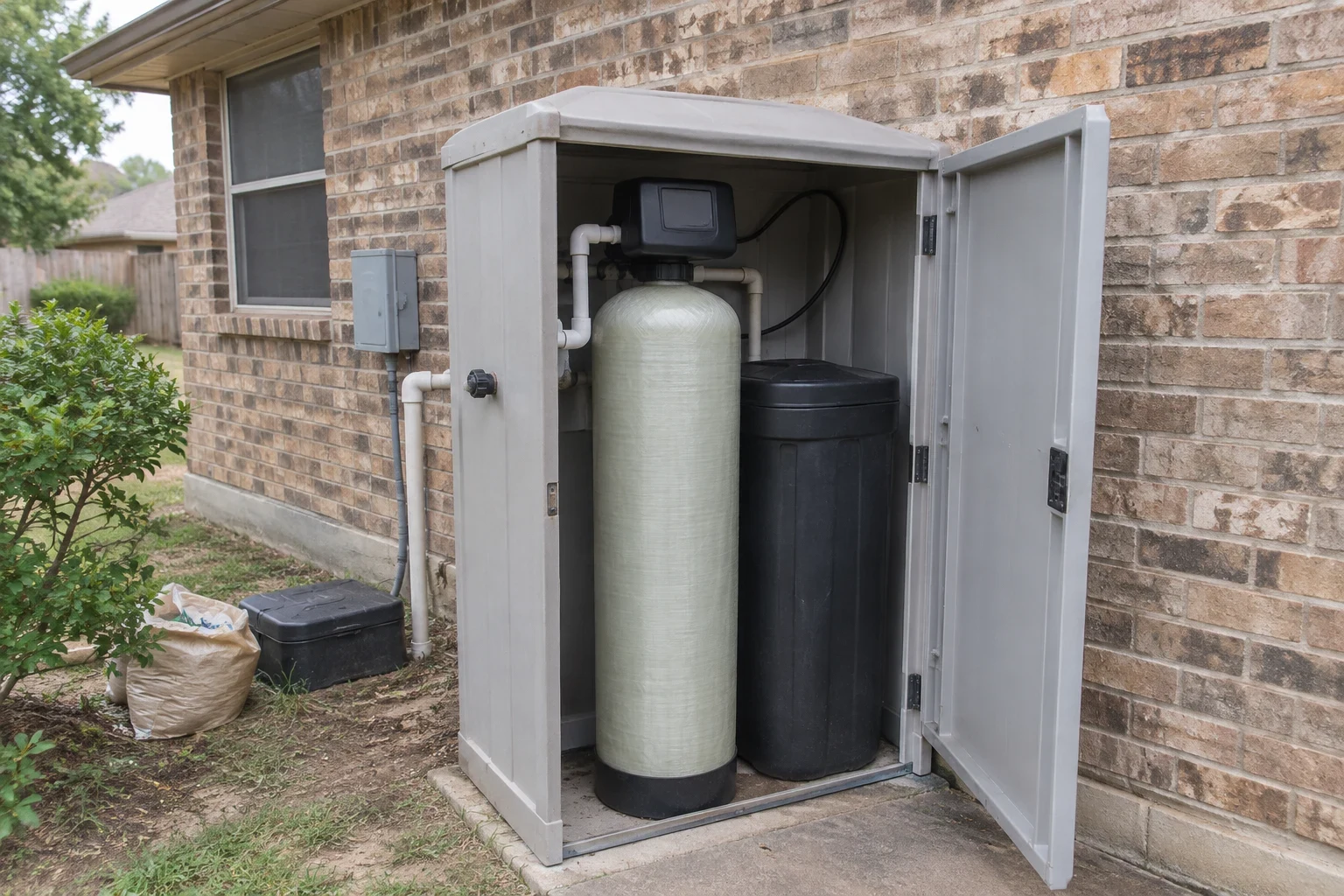
For most iron and moderate sulfur, we install a tank with an air pocket at the top and a control valve that refreshes it on each backwash cycle. No chemicals are added to your water.
Chemical feed for heavy loads
When sulfide or iron levels are high, a small metering pump adds chlorine or hydrogen peroxide ahead of a contact tank. That gives the oxidizer time to work before catalytic carbon finishes the job.
Drain and bypass plumbing
Backwash water needs a proper drain with an air gap, and we add a bypass valve so the system can be serviced without shutting off your home.
Water heater check
If the smell is only on the hot side, we look at the anode rod. A magnesium rod can react with sulfate in the water and produce hydrogen sulfide inside the tank, and swapping it is often part of the solution.
Signs your water carries iron or sulfur
- Rust-orange stains
- Rings in toilet bowls, streaks under faucets and orange spots on the shower floor point to dissolved iron oxidizing on contact with air.
- Rotten-egg smell
- A sulfur odor from every tap means hydrogen sulfide in the supply. If it shows up only in hot water, the water heater is likely involved.
- Dingy or yellowed laundry
- Iron binds to fabric in the wash, and chlorine bleach makes it worse by setting the stain.
- Slime in the toilet tank
- A reddish or black gel on the tank walls is often iron bacteria, which feed on dissolved iron and can clog valves and aerators.
- Black specks or tarnished silver
- Black particles suggest manganese, and sulfide tarnishes silverware and copper fittings over time.
How the work runs
- 1
Test before anything is sold
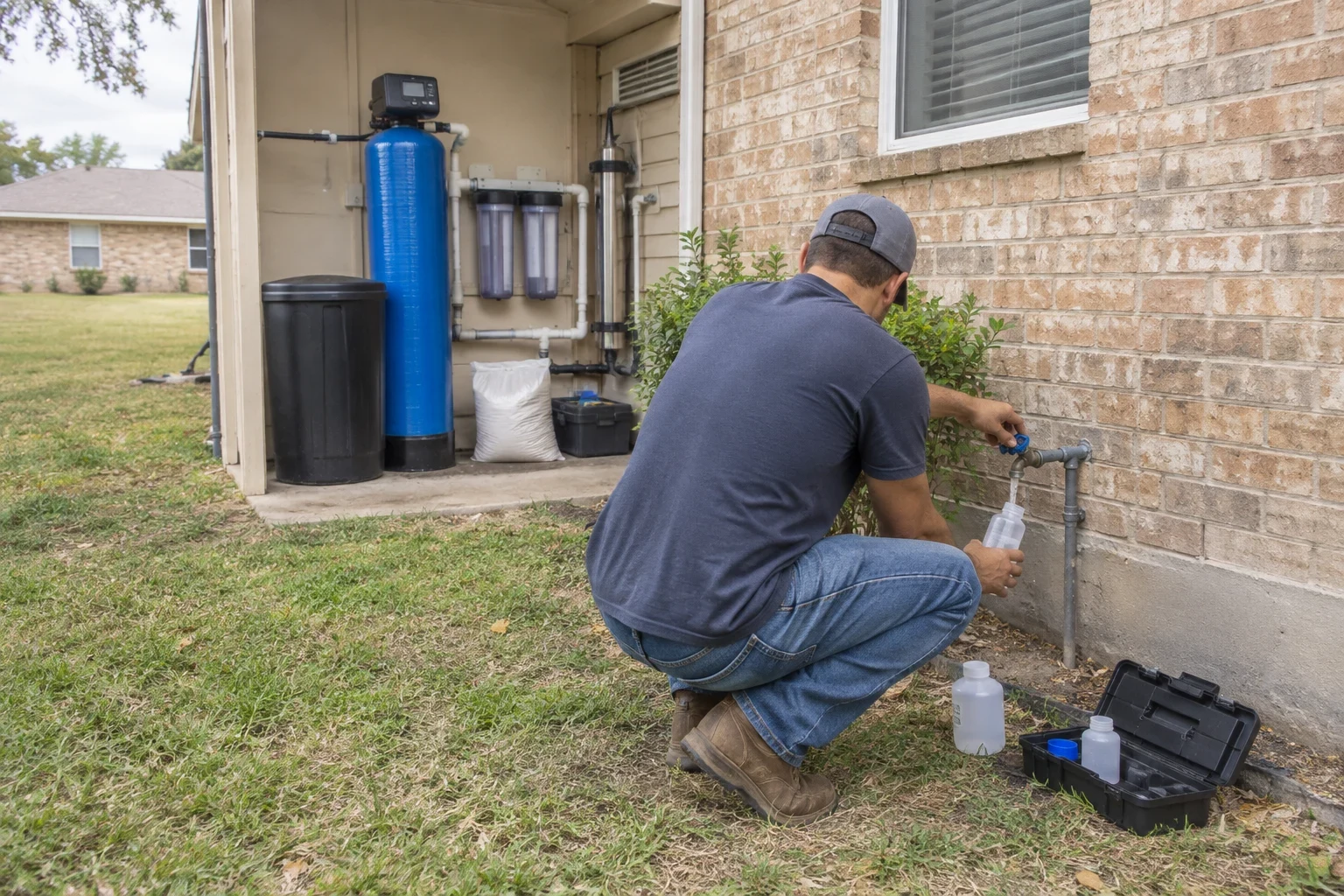
We start with a free water test at your home. You see the iron, sulfide and pH readings, and we explain which ones drive the equipment choice.
- 2
Size to your flow rate
We count bathrooms and fixtures to set the peak flow the filter must handle. An undersized tank lets iron slip through when a shower and the washing machine run at the same time.
- 3
Install at the main line
We cut in after the main shutoff and ahead of the water heater, so treated water feeds every fixture. Your supply stays shut off while we make those connections, and we lay down drop cloths around the work area first.
- 4
Program and flush
We set the backwash schedule to your iron load, run a full cycle, and flush the lines. Old stains in fixtures fade with cleaning once new iron stops arriving.
What moves the price
The cost depends on how much iron and sulfide your water carries and how much water your home uses at peak. We give you a written, line-item quote after the test so you can see each part. We also offer free installation.
- Contaminant levels
- Low to moderate iron and sulfide can be handled by air injection alone. Higher levels call for a chemical feed pump and contact tank, which adds equipment.
- Home size and flow
- More bathrooms mean a higher peak flow, which needs a larger tank and more media to keep removal steady.
- pH correction
- If your water is acidic, a neutralizing stage may be needed ahead of the filter so the oxidizing media can do its work.
- Drain access and plumbing
- A nearby drain and an accessible main line keep the install simple. Long runs to a drain or tight garage layouts add parts and time.
Iron and sulfur questions
- Will a water softener remove iron?
- A softener can take out small amounts of dissolved ferrous iron, but ferric iron and iron bacteria foul the resin. Hydrogen sulfide passes through a softener untouched. For real iron or sulfur problems, an oxidizing filter is the right tool, sometimes paired with a softener if your test also shows hardness.
- Why does only my hot water smell like sulfur?
- That usually points to the water heater. Bacteria and a magnesium anode rod can convert sulfate into hydrogen sulfide inside the warm tank. Replacing the anode with an aluminum-zinc or powered type often stops it, and we check this before recommending a full filter.
- Do air-injection filters add anything to my water?
- No. They use air drawn into the tank to oxidize iron and sulfide. Only chemical-feed systems add chlorine or peroxide, and catalytic carbon removes the residual before water reaches your taps.
- How often does the system backwash?
- Most run every one to three nights, set by your iron level and water use. The cycle happens in the early morning hours, sends trapped particles to drain, and resets the air pocket.
- Do you install in Kyle and Lockhart too?
- Yes. We install iron and sulfur filtration in Niederwald and nearby towns including Kyle, Lockhart, Buda and San Marcos.
Get stains and odor stopped before summer
We will test your water at no cost and show you exactly what is causing the stains or smell. Then you get a clear quote by phone for the system that fits your home.